AI vs. Hiring a Full-Time Dispatcher: Real Cost Comparison for Concrete Contractors
Most concrete contractors reach the same fork in the road around the same size: the phone is ringing more than one person can answer, quotes are slipping through the cracks, and the owner is fielding calls from a truck cab between pours. The instinct is to hire a dispatcher. The math usually says otherwise.
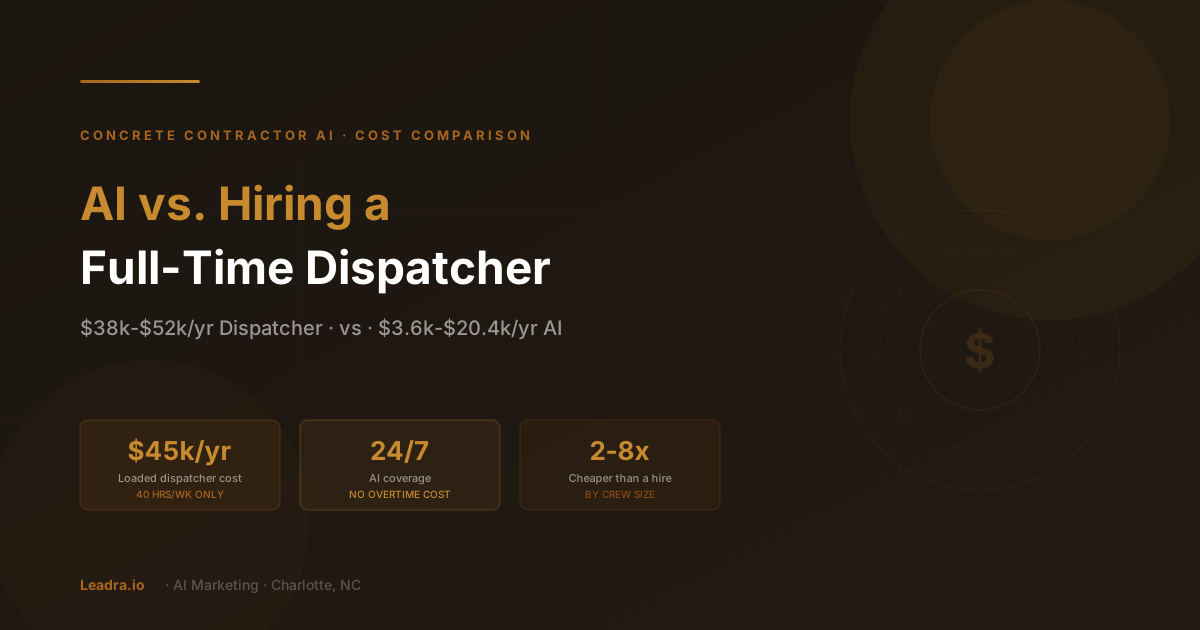
A loaded full-time dispatcher costs $38,000 to $52,000 a year, while a full AI call-answering and lead-qualification system costs $3,600 to $20,400 a year depending on call volume. This guide breaks down exactly what a dispatcher costs once you load in payroll tax, benefits, and turnover, compares it line by line against AI pricing tiers, and gives you the honest answer on where a human hire still beats automation.
If you have already looked at the general AI cost and ROI breakdown for concrete contractors, this guide answers the specific question that comes right after: is it cheaper than just hiring someone?
What a Full-Time Dispatcher Actually Costs
The number contractors budget for is the hourly wage. The number that actually hits the P&L is higher, because a wage is only the starting line:
| Cost Component | Basis | Annual Cost |
|---|---|---|
| Base wage | $17 – $23/hr, 40 hrs/wk | $35,360 – $47,840/yr |
| Payroll tax (FICA, FUTA, SUTA) | ~9-10% of wages | $3,180 – $4,780/yr |
| Workers' comp (office class code) | ~1-2% of wages | $350 – $960/yr |
| Health benefits (if offered) | Partial employer contribution | $0 – $4,800/yr |
| Recruiting & onboarding (amortized) | 1-2 weeks lost productivity + ad spend | $800 – $2,200/yr |
| Total loaded annual cost | One full-time employee, 40 hrs/wk coverage | $38,000 – $52,000/yr |
And that $38,000-$52,000 buys one person, 40 hours a week. It does not buy nights, weekends, lunch-break coverage, or the ability to answer three calls at once during a rain-delay morning when every job on the schedule needs a reschedule text at the same time.
What AI Costs for the Same Job
AI pricing scales with call volume instead of staying fixed like a salary. Here is the same coverage — answering calls, qualifying leads by project type and size, following up on quotes, and rescheduling rain-delayed pours — priced by contractor size:
Solo / two-crew
Under 25 estimate calls/mo
$300 – $650/mo
$3,600 – $7,800/yr
Growing operation
25 – 60 estimate calls/mo
$850 – $1,700/mo
$10,200 – $20,400/yr
Multi-crew / full stack
60+ estimate calls/mo
$1,700 – $3,200/mo
$20,400 – $38,400/yr
Even at the top tier — a multi-crew operation running a full AI stack — annual cost tops out around $38,400, and that is before the reality that most contractors at that scale would need to pay for a second dispatcher or overtime coverage anyway. For the full breakdown of what goes into each pricing tier, see the complete AI cost and ROI guide.
Dispatcher vs. AI: Side by Side
| Factor | Full-Time Dispatcher | AI System |
|---|---|---|
| Hours of coverage | Typically 40 hrs/wk, no nights or weekends without overtime | 24/7 — nights, weekends, and rain-delay surges included |
| Cost when call volume is low | Full salary regardless of call volume | Scales down with actual usage |
| Sick days / PTO / turnover risk | Yes — coverage gaps during absences, re-hiring cost on turnover | None — system runs every day, no re-training after a hire |
| Handles a sudden rain-delay call surge | One person can only answer one call at a time | Handles simultaneous calls without a busy signal |
| In-person crew coordination | Yes — can walk the yard, talk to crew leads face to face | No — text and call only, no physical presence |
| Judgment calls on disputes or change orders | Yes — human relationship context and negotiation | No — routes complex or sensitive calls to the owner |
| Ramp-up time | 2-4 weeks of training before fully productive | Live within days of setup and CRM integration |
Where a Human Still Wins — the Honest Version
This is not a case that AI wins on every dimension. A dispatcher brings things automation cannot replicate, and pretending otherwise sets contractors up for a bad rollout:
Face-to-face crew coordination.
A dispatcher can walk out to the yard, catch a crew lead before the truck rolls, and settle a scheduling conflict in a two-minute conversation. AI operates over text and phone only — it has no physical presence on the job site.
Negotiating change orders and handling disputes.
When a homeowner wants to argue about a crack in a cured slab or negotiate a mid-project scope change, that requires relationship context, tone judgment, and authority to make a call on the spot. AI routes these to the owner rather than attempting to resolve them.
Institutional memory that builds over years.
A long-tenured dispatcher remembers which subdivisions have tricky HOA rules, which suppliers run late in the spring, and which past clients are worth a personal call instead of a text. AI systems improve with better CRM data, but they start from zero on relationship history.
For a deeper look at where automated phone coverage specifically beats or loses to a live person, see the comparison in AI receptionist vs. answering service for concrete contractors.
The Hybrid Model Most Growing Contractors Land On
Contractors below three crews rarely need a full-time office hire at all — the call volume does not justify the salary, and an AI receptionist handles the volume for a fraction of the cost. Contractors above that size tend to land on a hybrid: AI handles call answering, lead qualification, quote follow-up, and weather-delay rescheduling around the clock, while a part-time or full-time coordinator handles in-person crew logistics, supplier relationships, and any call the AI flags as needing a human judgment call.
That hybrid setup typically costs less than one full-time dispatcher salary while covering more hours and never missing a rain-delay morning. It is also the fastest path to scaling past three crews without the office overhead scaling at the same rate as the field crew. For the broader automation stack this pairs with, see the concrete contractor marketing automation guide.
Hiring vs. AI for Charlotte, NC Concrete Contractors
Charlotte's office admin wages have climbed alongside the metro's population growth, and finding a reliable dispatcher who understands pour scheduling and weather-delay logistics is harder than it looks — turnover in entry-level office roles across Mecklenburg County runs high, which means the recruiting and re-training cost in the table above is not a one-time event for a lot of contractors.
Charlotte concrete contractors who switch to AI for call answering typically redirect the salary they would have spent on a dispatcher into crew capacity or paid lead generation instead — both of which scale revenue directly, unlike a fixed office salary. Book a free strategy call or call +1 (864) 721-8384 to see the numbers for your crew size.
How to Decide — Three Questions to Answer This Week
Count your monthly estimate calls.
Under 40 a month, AI wins on cost with room to spare. Over 80 a month with three or more crews, start pricing a hybrid model instead.
List the judgment calls your office actually handles.
If most of the day is answering calls, qualifying leads, and sending quote follow-ups, that is exactly what AI automates. If most of the day is crew coordination and dispute handling, a human stays essential.
Price both options against your real numbers.
Get a dispatcher wage quote from a local staffing site and an AI quote based on your actual call volume — not the base plan. Compare loaded annual cost, not just the sticker number.
Frequently Asked Questions
How much does a full-time dispatcher cost a concrete contractor?
A full-time dispatcher or office admin for a concrete contractor typically costs $38,000 to $52,000 a year once you load in payroll tax, workers' comp, and basic benefits on top of a $17-$23/hour wage. That figure assumes one person covering roughly 40 hours a week, which still leaves evenings, weekends, and lunch breaks unanswered unless you pay overtime or hire a second part-time person.
Is AI cheaper than hiring an office employee for a concrete business?
Yes, on a pure dollar basis. A full AI call-answering and lead-qualification system for a concrete contractor runs $300 to $1,700 a month, or $3,600 to $20,400 a year, versus $38,000 to $52,000 a year for one loaded full-time dispatcher. AI also covers nights, weekends, and rain-delay call surges that a single employee physically cannot staff without overtime pay.
Can AI fully replace a dispatcher for a concrete contractor?
AI replaces the phone-answering, lead-qualification, quote follow-up, and weather-delay rescheduling work that eats most of a dispatcher's day. It does not replace judgment calls that require real relationship context — negotiating a change order with a difficult client, managing an in-person schedule conflict between two crews, or handling a legal or insurance dispute. Most concrete contractors who add AI either stay solo on the office side or keep a part-time person for the judgment-call work while AI handles the volume.
What is the break-even point between hiring a dispatcher and using AI?
For a single-crew or two-crew concrete contractor doing under 40 estimate calls a month, AI wins on cost every time — a dispatcher's salary far exceeds what that call volume justifies. The math starts to favor a hybrid model once a contractor is running three or more crews, exceeding roughly 80-100 calls a month, and needs someone on-site to coordinate crew logistics in person. At that scale, most contractors keep AI for call answering and lead qualification and add a part-time or full-time coordinator for physical scheduling.
See the Real Numbers for Your Crew Size
Leadra.io builds AI call-answering and lead-qualification systems for concrete contractors. We will show you the exact cost comparison against hiring — free, no obligation.
Written by the Leadra.io Team. Leadra.io is an AI marketing agency helping concrete contractors and local businesses grow using AI-powered automation, lead capture, and revenue growth systems. Based in Charlotte, NC — serving clients nationwide.